What
is Tapering?
 |
| Inigo Mujika (centre) |
By
Andrew Richardson
After
recently attending the Inigo Mujika seminar at Teesside University I have put
together this short article on Tapering for Strength athletes based what I have
learned form that seminar. This article will look into what is tapering, the
effects of tapering, different tapering methods, tapering for strength sports
and finally tapering for team sports.
What is Tapering?
Tapering (in sports context) defined by Mujika means “a progressive
non-linear reduction in the training load during a variable period of time, in
an attempt to reduce the physical and psychological stress of daily training and
optimise sports performance” (Mujika 2000). It is used in the run of a sporting
event where the final preparations are put in place for the athlete to achieve
the best performance possible. This will include de-loading the training
through reducing the training volume and frequency but keeping the intensity
high to replicate the competition.
Inigo has two ways of looking at tapering for athletes;
1/ The goal during taper periods is to maintain the physiological adaptions
achieved during intensive training, while the negative impact of training resolves.
Under ideal circumstances, this will result in an athlete who has made maximal
physiological adjustments at the exact same time the negative influences of
training have diminished, resulting in an optimal performance potential.
(Mujika 1998)
2/ The performance enhancement that usually takes place with the taper is
related to recovery of physiological capacities that were impaired by past
training and to restoration of the tolerance to training, resulting in further
adaptions during the taper. (Mujika 2009).
Both correct ways of looking at what the effect tapering does in the lead
up to a competition. To apply these to a strength athlete such as myself in powerlifting
using the first definition, my goal is to maintain the strength gained in the
run up to my next comp, give my CNS (Central Nervous System) some recovery
especially from lifting 85%-90% in previous weeks. Relating to the second
definition, the rest leading up to the event will allow my body to feel fresh
and ready to attempt new maxes especially after running a successful program. The
majority of all physiological adaptions will occur before the taper but some
will occur during the taper such as repair or muscle fibers, increased motor
neuron recruitment etc.
From the seminar I learned of a simple model that helps explain an athlete’s
performance (Figure 1)
Training = Fitness +/- & Fatigue +/- = Performance
The model shows as fitness is increased (+) the
athletes performance will increase however if fatigue is increased then the
athletes performance will be reduced (-).
What are the effects of a taper?
There are physiological and psychological effects
of an effective taper pre competition.
Physiological effects include (a range of effects
for all sports): increased VO2 max, economy, muscle oxygenation,
testosterone, red blood cell volume, hematocrit, hemoglobin, reticulocytes,
glycogen concentration, oxidative enzymes, muscle fiber contractile properties,
strength and power. (Mujika 2004)
Psychological effects include: reduced perception
of effort, global mood disturbance, perception of fatigue; increased vigor,
quality of sleep. (Mujika 2004)

It should be noted the effects of the environment can have on a taper,
these include;
1/ Stressors such as travel across time zones, heat and altitude may
interfere with the taper of athletes preparing for international competition.
2/ a training load reduction can help an athlete cope with jet-lag, and
this training reduction should be integrated into the taper program.
3/ Tapering in hot environments before competition seems to be compatible
with the reduction in training volume recommended when facing heat stress.
4/ Altitude training camps also require an initial reduction in training
load, which may in itself constitute a form of tapering. (Pyne et al 2009)
Recently we had many powerlifters from three federations compete across Europe
and Africa. The WDFPF will have their World Single Lifts in England, the GPC had
their Europeans in England and the IPF and their World Championships in
Finland, 3 different time zones, 3 different temperatures/environments to
deal with. All athletes must of (or should have) taken into account the
travelling they will do and how it will affect their taper/performance.
There are some other points worth mentioning about tapering and their
effects (if any);
1/ Regardless of the caliber of the athlete tapering induced performance
gains can be expected.
2/ Tapering induced performance gains may have a major impact on
competition placing.
3/ No evidence of a sex effect concerning physiological adaptions and taper
effects on performance.
4/ Event duration and metabolic contribution do not affect the potential
gain that can be obtained during the taper.
5/ Technical and Biomechanical aspects of competition do not seem to affect
the performance outcome of a taper. (Mujika et al 2002)
Athletes not only need to be aware of the tapering part of
the season they need to be very wary of the whole training macrocycle. Inigo
uses this graph to help explain the many variables an athlete should focus on
through his/her training programme.
Maintenance
of Peak Fitness throughout the Season Mujika 2007 (Figure
2)
Factors Affecting Peak Maintenance
- Time Between Games
- Travel
- Competiveness of the Opposition
- Injury
- Minutes of Game Played
- Physiological Adaptions to training
- Recovery
The time between competitions needs to be taken into
account as this will allow the athlete/coach to program specific training
cycles and base them off so many days till competition “x”. Travel is a big
factor in affecting an athlete’s performance as jet lag and different time
zones can be an athlete’s worst nightmare. Best plan of action is to arrive 3-4
days before the event to get used to the environment. The earlier you arrive
before the event especially in a different country the better as your body will
start to adapt to it.
Competiveness of the opposition is another factor which
should be considered. If it is a regional event and you only need to make a
qualifying total there is no need to go all out and break record’s if they
won’t count. Peak you’re training where and when it matters at the World
Championships for example. Injury is an unfortunate variable to all athletes
but it is one we must deal with sooner or later. Main advice is to prevent any
injury from occurring in the first place.
Minutes of game play. This is looking at how long the event
takes place for, is it 5 seconds or 5 minutes etc. Physiological adaptations to
training and competition. It refers to what adaptions from the athlete’s
training will be present such as; hypertrophy, body fat reduction, increased
motor neuron recruitment. Recovery, what methods to help speed up recovery; ice
baths, recovery drinks, compression clothing etc.
Different Types of Tapering
There are 3 types of Tapering;
1/ Exponential Taper (Fast Decay)
2/ Exponential Taper (Slow Decay)
3/ Step Taper (Reduced Training)
The exponential taper’s
are essentially linear tapering as the quantity of training decreases steadily
over the course of the taper in a continuous slide, reaching next to no
training at the end of the taper. The main difference between a fast and slow
decay taper is one is very quick and the other is very slow it takes longer to
taper than the other. In a step reduction the total training volume is reduced
by “x” amount let’s say 15%, and this new training volume of 60%is now
sustained throughout the tapering period.

Tapering for a Strength Sport
During the seminar we looked at a range of sports and how
tapering can affect them. When we looked at strength sports the rule of thumb
was between 8-14 days is more than enough for a taper.
I was very pleased to hear this from someone who has 3
PHD’s, over 80 published Sports Science Journal’s and a few books to his name
as I do a similar taper routine. My taper would be 12 days out from my
competition.
Days 1-7 will only have 4 sessions, one day each for the 3
lifts (squat, bench and deadlift) to do my comp openers. The 4th day
for some stretching/mobility work. 8-14 no training at all resting to allow my
CNS full recovery. I watch my food intake as I don’t want to put on extra
weight which could force me into a higher weight class due to me not training
as much. I will still be stretching and doing mobility work every day and do
some bar work reinforcing technique in the last few days.
This works for me it may not work for you. Some people need
a longer taper others shorter, that’s why there are fast and slow decay
exponential tapers to suit those with specific needs.
My own exclusive opinion is not to over complicate the
whole tapering process. If you need 5 days rest before a comp then you do that.
It works for you keep doing it. I find my own body needs the rest and with it,
I feel refreshed, muscles don’t need feel tired, joints don’t ache and I am
full of energy.
Tapering for Team Sports
Tapering for team sports is going to be harder than for individual
sports as the needs are not of one but of 20 + players each requiring different
tapering methods. However most will be
competing and training on and at the same days/locations. Figure 3 (Below)
shows a basic model for teams who have a match on Saturdays how their general
training plan should follow in season.
Figure 3

For those who are coaches these guidelines should be
applied to all your athletes and their respective training plans;
- Set
specific, difficult targets for the players to increase their physical and
mental strength and determination
- Help
the players stay motivated, focused, relaxed and free of external and internal
pressure in the days before and during the event.
- Find the optimal balance between training and recovery
- Minimize the incidence of injury throughout the competitive season, in a coordinated effort between players’ club staff and national team staff.
- Perform a taper that had been tested and proven to be successful in prior events
- Match or exceed the physical output requirements of competition during training (My personal favourite)
In Summary for Tapering
- Minimise Fatigue and Improve Fitness
- Maintain Training Intensity
- Reduce Training Volume by 41-60%
- Maintain training frequency at >80%
- Individualise Taper duration between 4 and 28 days
- Use progressive tapering designs
(Muijka and Padilla 2003)
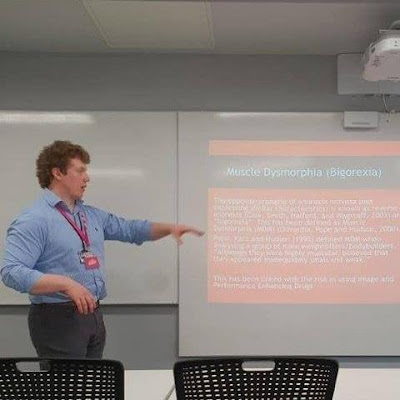
My passion is for Sport Science which has led to additional interests incorporating Sports Psychology, Body Dysmorphia, AAS, Doping and Strength and Conditioning. Within these respective fields, I have a passion for Strength Training, Fitness Testing, Periodisation and Tapering. I write for numerous websites across the UK and Ireland including my own blog Strength is Never a Weakness.

I had my own business for providing training plans for teams and athletes. I was one of the Irish National Coaches for Powerlifting, and have attained two 3rd places at the first World University Championships in Belarus in July 2016.
Feel free to email me or call me as I am always looking for the next challenge.
Andrew Richardson, Founder of Strength is Never a Weakness Blog

I have a BSc (Hons) in Applied Sport Science and a Merit in my MSc in Sport and Exercise Science and I passed my PGCE at Teesside University. Now I will be commencing my PhD into "Investigating Sedentary Lifestyles of the Tees Valley" this October 2019.
I am employed by Teesside University Sport and WellBeing Department as a PT/Fitness Instructor.
My long term goal is to become a Sport Science and/or Sport and Exercise Lecturer. I am also keen to contribute to academia via continued research in a quest for new knowledge.
My most recent publication:
My passion is for Sport Science which has led to additional interests incorporating Sports Psychology, Body Dysmorphia, AAS, Doping and Strength and Conditioning. Within these respective fields, I have a passion for Strength Training, Fitness Testing, Periodisation and Tapering. I write for numerous websites across the UK and Ireland including my own blog Strength is Never a Weakness.

I had my own business for providing training plans for teams and athletes. I was one of the Irish National Coaches for Powerlifting, and have attained two 3rd places at the first World University Championships in Belarus in July 2016.
Feel free to email me or call me as I am always looking for the next challenge.
Contact details below;
Facebook: Andrew Richardson (search for)
Facebook Page: @StrengthisNeveraWeakness
Twitter: @arichie17
Instagram: @arichiepowerlifting
Snapchat: @andypowerlifter
Email: a.s.richardson@tees.ac.uk
Linkedin: https://www.linkedin.com/in/andrew-richardson-b0039278


